
Preparing for Sponsorship
Introduction
Hi, I’m Dennis Keeley.
I’ve been a race fan for more than 50 years and an advocate for youth and grassroots racers for more than 40 years.
During that time I’ve been a crew member, promoter, the publisher of Western Racing Scene (WRS) and American Racing News (ARN), and throughout my career I’ve been a grassroots racing advocate.
Along the way I’ve learned that success in racing isn’t just about what happens on the track.
It’s about relationships.
It’s about preparation.
And it’s about creating value for the people who believe in you.
One thing I’ve noticed over the years is that many young and local racers were never taught the basic fundamentals of sponsorship.
I’m not talking about the secrets of negotiations, budgets, or marketing.
I’m talking about the fundamentals that make you attractive to sponsors.
That’s why I wrote this guide.
My goal isn’t to teach you how to ask businesses for money. My goal is to help you become the kind of racer businesses want to support.
Why This Guide Exists
Professional racing series like NASCAR and IndyCar can offer sponsors television audiences, millions of fans, and national exposure.
Most grassroots racers can’t.
But that doesn’t mean you can’t attract sponsors.
It simply means you have to offer something different.
The best grassroots sponsorships aren’t built on television ratings or social media numbers.
They’re built on relationships.
They’re built on professionalism.
They’re built on trust.
And they’re built on creating value for local businesses.
That’s what this guide is about.
The Big 3: How Opportunities Come Your Way
There are really three main ways opportunities come your way.
1. You Win… A Lot
Winning gets attention.
Attention creates opportunities.
2. You Start With Advantages
Maybe your family has money.
Maybe you already know the right people.
Maybe you have opportunities most racers don’t.
I can’t teach you any of those things.
3. You Learn to Create Value
This is where your journey begins.
Most of us can’t control the first two.
But every racer can learn to create value.
That’s what SponsorGarage is here to help you do.
Coach’s Note
As much as we prepare, build value, or even win championships, nothing guarantees sponsorship.
What the principles in this guide do is give you a better chance of creating legitimate opportunities.
Where’s the Money?
That’s one of the first questions I hear from racers.
It’s a fair question.
Most people think sponsorship begins when a business writes a check.
It doesn’t.
Successful sponsorships begin long before money changes hands.
They begin when you create value for someone else.
Instead of asking,
“How do I get a sponsor?”
try asking,
“How can I help this business succeed?”
That one question changes everything.
When businesses see that you’re dependable, professional, and genuinely interested in helping them, they begin to trust you.
Trust creates relationships.
Relationships create opportunities.
And many times, those opportunities eventually become financial sponsorships.
Don’t chase the money.
Chase the opportunity to create value.
The money often follows.
How This Guide Works
Every lesson follows the same format.
It starts with a story. Stories help us see how ideas work in real life, not just on paper.
Next comes a short summary of the lesson.
Then you’ll work through the Ask, Learn, Build system.
ask
Ask starts with a question a racer like you might ask. It helps you think about the lesson and teaches you how to ask the important questions.
learn
Learn gives you the key points in a simple, easy-to-reference format.
build
Build is where you put what you’ve learned into action. Don’t overthink these activities. They’re meant to help you build good habits one step at a time.
You don’t have to be perfect.
You just have to keep improving.
The Pit Walk
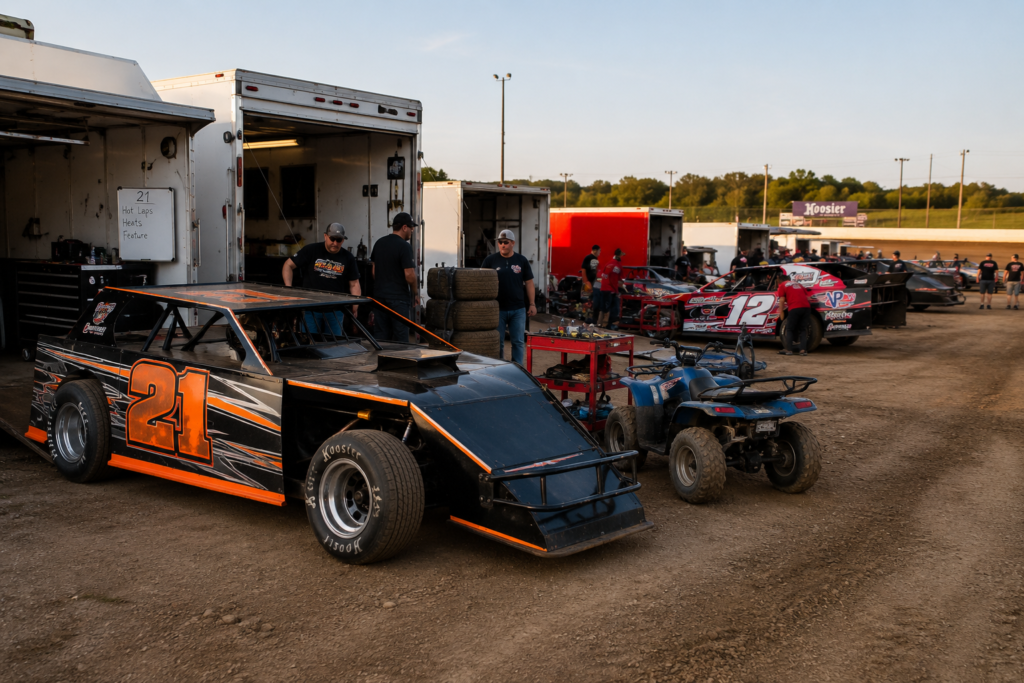
When I was crewing on a stock car team, we traveled to different tracks and raced against drivers we had never competed against before.
Before each race, the driver/owner would walk through the pits, and I would write down whatever he told me.
“48 fast.”
“63 aggressive.”
“17 slow.”
I eventually asked him how he knew. We had never raced these guys before. How could he already know how they raced?
He explained that he was reading the clues.
He studied the damage and what they revealed about how each driver used the car. Different marks told him different things about a driver’s style — who was aggressive, who was used up by others as a rolling wall, and who attacked the inside line.
He wasn’t just trying to figure out who was fast.
He was learning who he was about to race.
That information helped him make better decisions before the green flag ever dropped.
Looking back, the thing that impressed me even more was that he wasn’t a famous driver with a huge budget. He was a regular guy who had learned how to make a living doing what many of us dream of doing.
He didn’t get there by having the biggest name or the most resources. He got there by paying attention, learning from experience, and understanding the details that others missed.
Take a look around and ask yourself: Are there clues right in front of you that could help your sponsorship program?
Is there a company that sponsors a racer in every division but yours?
Is there a sponsor that you already do a lot of business with?
Is there a business owner who’s a fan of racing but doesn’t sponsor anyone?
The clues are there.
You just have to learn how to read them.
Lesson Recap: Successful People Pay Attention
The best racers don’t just focus on their own car. They watch, listen, and learn from everything happening around them. They understand that every person, every team, and every experience can teach them something.
Sponsorship works the same way.
Before you approach a business, you need to understand your own team, your audience, and the value you can create. The racers who prepare themselves are the ones who are ready when opportunities appear.
ask
“Why should I pay attention to things outside my own race team?”
learn
The best racers pay attention. They don’t just focus on their own car. They learn from what’s happening around them.
build
Look Around
The next time you’re at the track, look beyond your own team.
- Most helpful track official?
- Most professional team?
- Most approachable team?
- Best-prepared team?
- Most knowledgeable person?
- Most sponsor presence?
- Most interesting business?
How can this list help me?
For example:
- I can look at the professional team and see what they’re doing that I could do better.
- I know which official I can go to when I have questions.
- I can see how another team works with its sponsors.
Coach’s Notes: Your Pit Walk
Much like the racer in this story, you should pay attention to what’s happening around you, too.
Look for clues that could help you build your racing program.
“This guy is helpful.”
“That team is skeptical.”
“This business is getting more involved.”
“That branch manager seems curious about us.”
Keep your eyes open. Pay attention to your racing world.
Take notes on what you learn.
It will pay off.
Sometimes a little. Sometimes a lot.

Don’t Do What I Did
I was in the final stages of signing a really nice sponsorship deal with a regional touring series. Our prospective sponsor was a fairly large supermarket chain, and the regional manager had a generous marketing budget. Everything was lining up, and we were about ready to get a nice slice of that pie.
I invited the prospect to a race and planned to follow up the next week to close the deal. We were hitting it off, and I was feeling pretty confident.
Then I made a mistake.
During our conversation, I started talking about the mistakes one of the region’s biggest supermarkets was making and how we could do a much better job. I’m sure that I may have even said the other supermarket didn’t have a clue.
I thought I was showing him how much I understood about marketing.
Instead, I was showing him I didn’t understand his business.
After that “great” weekend, I got a call from the prospect. He told me he had decided to sponsor another team.
I asked him why.
He said, “Everything we talked about was great. Your ideas were solid. But I don’t like how careless you were.”
I asked what he meant.
He was talking about the supermarket chain I had criticized.
That company was their parent company.
I had spent the better part of the weekend trying to convince him how smart I was, while proving I had not done my homework.
I had no comeback.
Lesson Recap: Do Your Homework
Before you approach a sponsor, learn their business. Know their company, their relationships, and their goals. A sponsor is not just a logo on your car—they are a business you are asking to trust you with their reputation.
ask
“Why should I spend time learning about a sponsor? Can’t I just ask them to sponsor me?”
learn
- Before asking a business to support you, understand who they are, what they do, and what matters to them.
- Sponsorship is a partnership, and partnerships start with respect. A sponsor is trusting you with their reputation, so you need to understand theirs.
build
Do Your Homework
Choose one company you might approach as a sponsor. Find out what you can about the business and fill in the answers below.
- What does the company sell?
- Who are its customers?
- Where does it do business?
- How long has it been in business?
- What makes it different?
- Mom & pop or corporate?
- Who are its competitors?
- What causes does it support?
- Are they involved with racing yet?
- What could my team do for this company?
When Opportunity Knocks
I’ve always been an advocate for the little guy.
That was the reason I started Western Racing Scene and later American Racing News.
I wanted to give racers who didn’t have big budgets or big names a chance to be seen.
The funny thing is, the little guy doesn’t always make it easy.
I would beg racers to send us information for WRS and ARN.
“Send me your team info.”
“Send me your photos.”
“Send me your results.”
Crickets.
I would contact small racing series asking for information because I wanted to help promote them.
More crickets.
Then came the wasted opportunity that still bothers me.
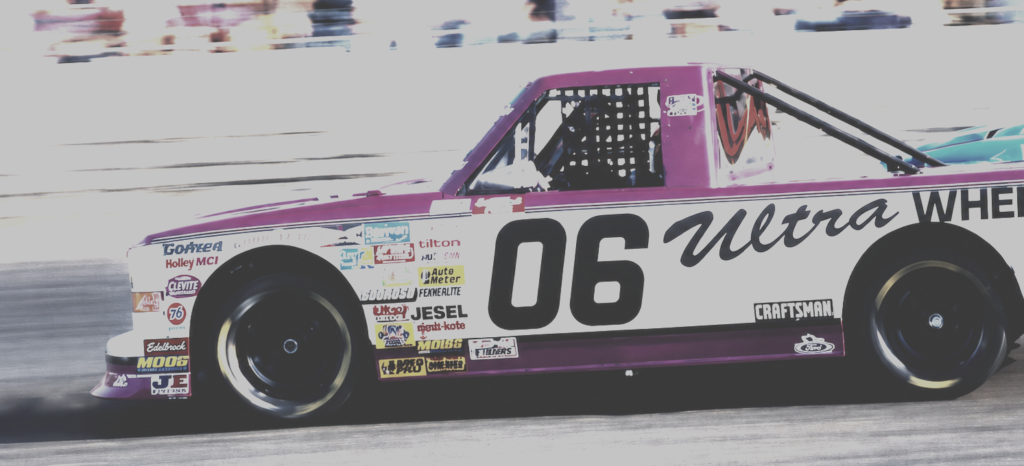
I had gotten to know the owner of a NASCAR Truck Series team.
One day I asked him where his second truck was. He told me the driver they had planned on using had backed out with no notice.
Half joking, I told him, “I know a local racer who could drive it.”
I told him the kid was talented and that he wouldn’t embarrass him. I also told him I would contact the media and tell the story of a local racer getting his big break in NASCAR.
The owner said, “Sure. Get me his resume.”
That’s when things got real.
I called the racer and told him about the opportunity. I told him I needed his resume as soon as possible.
One day went by.
Then two days.
Nothing.
Not a phone call.
Not a resume.
Nothing.
Finally, I had to call the team owner and tell him it wasn’t going to happen.
The opportunity was gone.
Later on, the racer found out the opportunity was real. He was excited. He begged me to see if I could get him another chance.
But the door was already closed.
The hardest part about opportunities is that they rarely arrive when everything is convenient. They usually show up when you are busy, unprepared, or unsure.
That is why preparation matters.
You cannot control when a door opens.
You can only control whether you are ready to walk through it.
Lesson Recap: Be Ready When Opportunity Comes
Opportunities do not always come when you expect them. Sometimes they show up suddenly, and you have to be ready to act.
You cannot control when someone opens a door for you. But you can control whether you are prepared to walk through it.
In racing and sponsorship, preparation matters. Having your information ready, knowing your goals, and being able to respond quickly can make the difference between creating an opportunity and losing one.
ask
“Why should I prepare for an opportunity that may never happen?”
learn
- Opportunities can appear when you least expect them.
- Respond quickly. The people who are prepared are the ones who can take advantage of new opportunities.
- Having your information, photos, and racing story ready makes it easier for others to help you.
- You cannot wait until an opportunity arrives to start preparing.
- Being talented is important, but being ready is what helps you move forward.
- A closed door is often an opportunity that came before you were prepared.
- The more prepared you are, the more opportunities you can create.
build
Prepare a Short Letter or Email
Prepare a short letter or email introducing yourself and your racing program. Include:
1. Who are you and what do you race?
2. Where do you race?
3. What are you racing for?
4. What have you accomplished?
5. What makes you or your team interesting?
6. How can someone contact you?
Once you’ve written it, print several copies and keep them nearby. If you have a website or other online option, create a web version you can send when an opportunity comes along.
The goal is simple: Be ready when the door opens.
A 4-Year-Old, a 3-Wheeler and a Plan
When a friend asked me to help his brother-in-law’s dirt modified team, I jumped at the chance. I guess they liked my enthusiasm because when they discovered my complete lack of mechanical skills, they promoted me to the prestigious position of team gopher.
Over the next several weeks, I spent a lot of time around racers. During that time, I heard the same thing over and over:
“If only I had a sponsor, I could win.”
“If only I had a sponsor, I could make it to NASCAR.”
And almost without fail, the next sentence would be:
“But sponsors only want winners.”
That never made sense to me. If everyone needs sponsors to win, and sponsors only sponsor winners, how does anyone ever get started?
I couldn’t stop thinking about it.
I read everything I could find about sponsorship and sports marketing until I felt like I had a plan.
Excited, I took my ideas to my friend’s brother-in-law.
He laughed.
I talked to other teams and got much of the same response.
Most appreciated my intentions, but they were convinced I didn’t understand how the real world worked.
A few weeks later, I got a call from my brother.
He had just bought his four-year-old son a 60cc Yamaha three-wheeler and wanted to get him started in racing. My brother would handle everything mechanical. He wanted me to handle sponsorship.
So I evaluated what we had.
We had a brand-new three-wheeler.
We had a trailer. We had a cute four-year-old rider.
What we didn’t have was a single accomplishment.
No wins.
No top fives.
No top tens.
Not even a race start.
We were as raw as a race team could possibly be.
But instead of focusing on what we didn’t have, I started looking at what we did have.
That changed everything.
Our first thought was to approach the Yamaha dealer across the street. After some discussion, however, we decided it made more sense to work with a dealer closer to the track where we would be racing. After all they had the most to gain from our racing.
At the time, I worked as a sign painter so I created a blueprint-style drawing showing what our trailer would look like with the dealership’s name displayed on it.
Armed with that drawing and a rough sponsorship proposal, we scheduled a meeting.
Honestly, I didn’t think we had much to offer, so I kept the request simple.
We asked for:
A small parts discount.
A couple of dealership T-shirts.
As many business cards as they were willing to give us.
After a little conversation, we walked out sponsored.
My brother was excited about the discount.
I was excited because we were sponsored.
I didn’t care that we hadn’t received much. In my mind, we were finally a real race team.
A few days before our first race, I found red denim jeans on clearance at Target. Combined with our red-and-white dealership shirts, we suddenly had uniforms.
I thought we looked pretty sharp.
That feeling lasted right up until we pulled into the pit gate.
Then I became convinced everyone would laugh at us.
I remember thinking, “Why couldn’t we just wear normal blue jeans?” Surely we were about to become the joke of the pits.
Oddly enough, nobody laughed.
Maybe we really did look sharp.
After all, we were the only team there wearing uniforms.
Our first few weeks on track were rough. Our little 60cc machine was outclassed by a field full of 70cc and 80cc three-wheelers.
While we weren’t making much of an impact on the racetrack, something interesting was happening in the pits.
Parents and kids kept stopping by our trailer.
They asked questions about getting started in racing, where to buy equipment, and what they needed to know.
Every one of them received a dealership business card with a note written on the back:
“DenKel Racing sent me.”
A few weeks later, while visiting the dealership, I casually asked if any of those cards had ever shown up. The dealer reached into his desk drawer, pulled out five signed cards, and said:
“Do you mean these?”
Even though I wasn’t the rider, I felt like I had just scored my first win.
This was working!
Not long after that, the dealership started calling us and asking us to stop by the shop.
Every visit seemed to come with a surprise.
Sometimes it was free parts.
Sometimes it was a case of oil.
Sometimes it was something else we needed.
One day we joined one of the dealership’s professional teams for a photo shoot.
I remember one of the pro riders asking the dealer: “Do you really want the kid in the photo with us?”
The dealer replied:
“That kid actually sells motorcycles for me.”
During our years together, he told us something I’ll never forget: “You are the most professional team I’ve ever worked with.”
When we first approached the dealership, we didn’t ask for much.
Just a foot in the door.
But over the years we ended up with a partnership that was as invested in our success as we were.
The lesson wasn’t that we found a sponsor. The lesson was that we created something worth being part of.
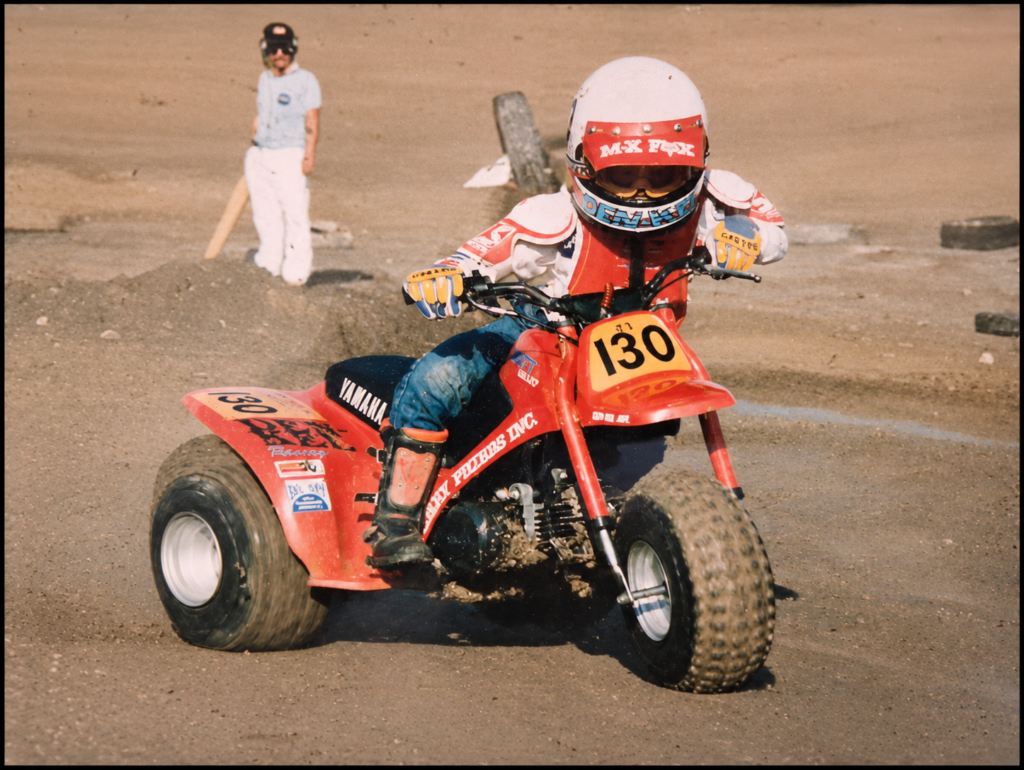
Photo courtesy of Thomas Keeley
Lesson Recap: Create Value Before Asking for Support
Sponsorship does not start with asking for money. It starts with finding ways to create value.
Many racers think they need trophies, a big budget, or a long list of accomplishments before a business will support them. But every team has something valuable to offer.
Your story, your effort, your personality, and your ability to help a business connect with people can all create value.
The question is not only, “What can a sponsor do for me?”
The better question is, “What can I do to help a sponsor?”
ask
“Why would a sponsor care about me if I haven’t won anything yet?”
learn
You do not need to be an established team to create value. Before asking for support, think about what you, even if you’re new, can offer a sponsor.
build
List 5 things your team can offer a sponsor today.
Don’t worry about race wins or accomplishments. The point is to make the sponsor aware of how your team can help them.
The Best Dollar I Ever Won
I was visiting a small track near where I was living. A few racers knew I was working with a couple of NASCAR teams, so they started razzing me about getting them sponsors.
One guy finally said, “I’ll bet you a dollar that even you can’t help me.”
He had good reason to be confident. He ran in the mid to back of the pack almost every week.
I don’t know what came over me because I really didn’t have time to give him the attention I like to give people, but I asked him a few questions.
“Can I make fun of you?” He laughed. “Yes.”
“Publicly?”
“Yes.”
“It’s a bet.”
I watched him the rest of the night.
He was slow.
Not slow like he wasn’t trying, but slow.
But I also noticed something else.
His car was always clean.
His crew got along.
Everybody was laughing, having fun, and enjoying themselves.
They weren’t frustrated because they already knew they weren’t racing for the win.
They were racing because they loved being there.
The next day I called him.
He explained he couldn’t afford expensive race engines. He ran a nearly stock crate engine and knew he wasn’t going to outrun the front runners.
He did say he could come up with a few hundred dollars for whatever I needed to help him.
The following week was an off week so I asked him to paint the car bright red, and I’d come over that Saturday.
Back then I did sign painting, so I showed up with a couple of small cans of paint and lettered the car.
Across both quarter panels I painted one word: Underdog.
I painted the numbers to match, and on the hood I hand-painted the old Underdog cartoon character.
The racer loved it.
Before I left, I handed him an ad from a local shop that printed custom T-shirts and sketched out a simple design—a bright red shirt with a big white U on the front.
The next race they showed up looking like a team.
Matching red shirts and a bright red race car.
The whole team was into the Underdog theme, which really helped sell it.
After the races, there was a sizable crowd around the car.
The driver called me a few days later. People kept asking them where they could buy the shirts. So he ordered a few dozen.
When they came in, I told the announcer they had shirts for sale after the races.
Some of the wives wore them in the grandstands and told people where to get them.
A few weeks later there was a whole section of Underdog fans sitting together.
Think about that for a minute.
One of the slowest cars at the track had become one of the most recognizable teams in the pits.
Not because they started winning.
Because people connected with their story.
Just before the season ended, a local car dealer decided to sponsor the team. They didn’t even ask to put their logo on the race car. Instead, they wrapped one of their street cars to look just like the bright red Underdog race car and used it for promotions.
At the final race of the season, I was walking to my truck when the driver came running across the pits.
He reached into his pocket, smiled, and handed me a dollar.
“I guess you won the bet.”
That was the best dollar I ever won.
That team didn’t become memorable because they started winning. They became memorable because they gave people something to cheer for.
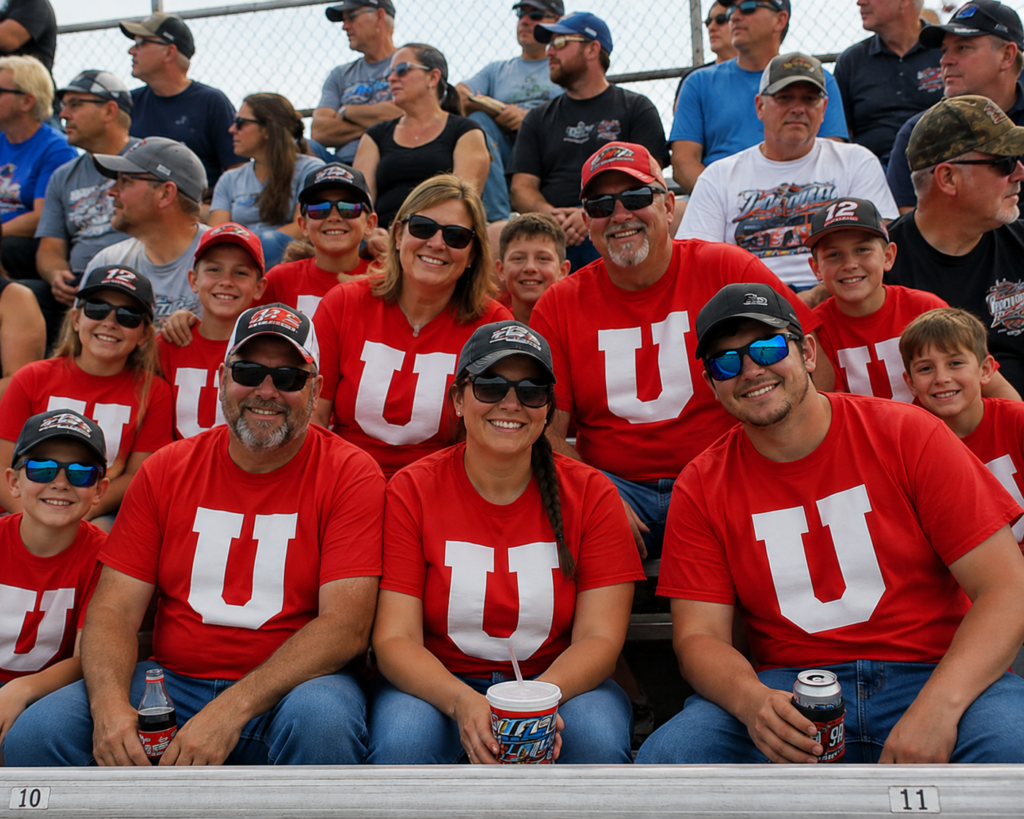
Photo created by AI to illustrate the story
Lesson Recap: Become Memorable
You do not have to be the fastest team to get noticed.
People remember teams that give them a reason to care. A strong identity, a good story, and a connection with fans can create opportunities even when the trophies are not there yet.
Sponsors want to be connected with teams that people remember.
When you stand out in a positive way, you make it easier for fans, businesses, and the racing community to notice you.
ask
“What can I do to make my team stand out?”
learn
You don’t have to be the fastest or have the most wins to stand out. Your story, personality, and the way you present your team can make you memorable.
build
Write a paragraph explaining what makes your team different.
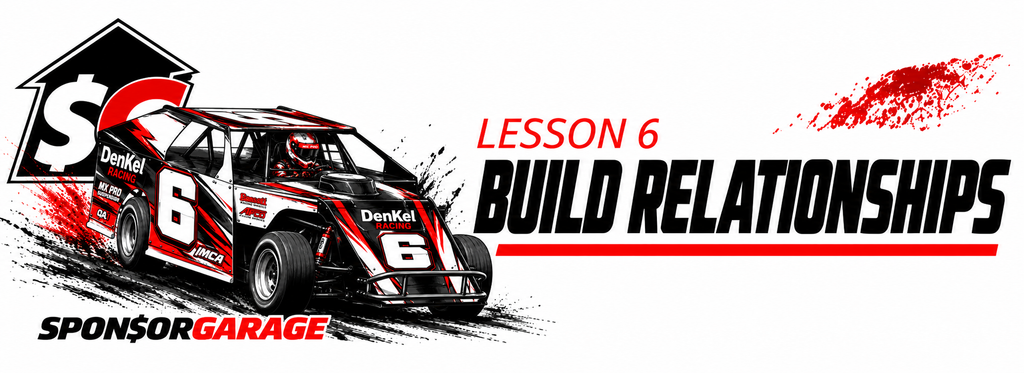
New To Town, Not New To Racing
When a Super Late Model driver’s home track closed, he faced a decision that many racers eventually encounter: quit racing or start over somewhere new.
He chose to keep racing.
The nearest opportunity was a track roughly 90 miles from home.
The team made the trip every week and quickly proved they could compete. The cars were fast, professionally prepared, and capable of running with the best teams at the track.
But being fast doesn’t automatically make you part of a new racing community.
Before going any further, it’s important to be clear about one thing:
I did not put this sponsorship deal together, and I claim no credit for it. I simply had the opportunity to watch it unfold firsthand.
At the time, I published a racing magazine and was preparing a feature story on the team. That gave me plenty of access and a front-row seat to what happened next.
The driver had a talent for creating eye-catching race cars. Many of his paint schemes were inspired by famous NASCAR rides, and fans always looked forward to seeing his car.
Looking for ways to build awareness in this new market, he approached a popular local radio station and proposed a sponsorship trade.
The station received prominent placement on the race car, including the hood and quarter panels, in exchange for radio advertising.
For many teams, that would have been the end of the story.
For this team, it was only the beginning.
The driver treated the relationship like a true partnership. He brought the race car to remote broadcasts, attended station promotions, and participated in community appearances whenever the racing schedule allowed.
Those appearances introduced him to many of the station’s advertisers.
One conversation led to another.
Then another.
Before long, every available associate sponsorship position on the car had been sold.
What began as a simple advertising trade evolved into something much larger. In a relatively short time, the driver went from being “the new guy from out of town” to becoming one of the most recognizable and respected members of the local racing community.
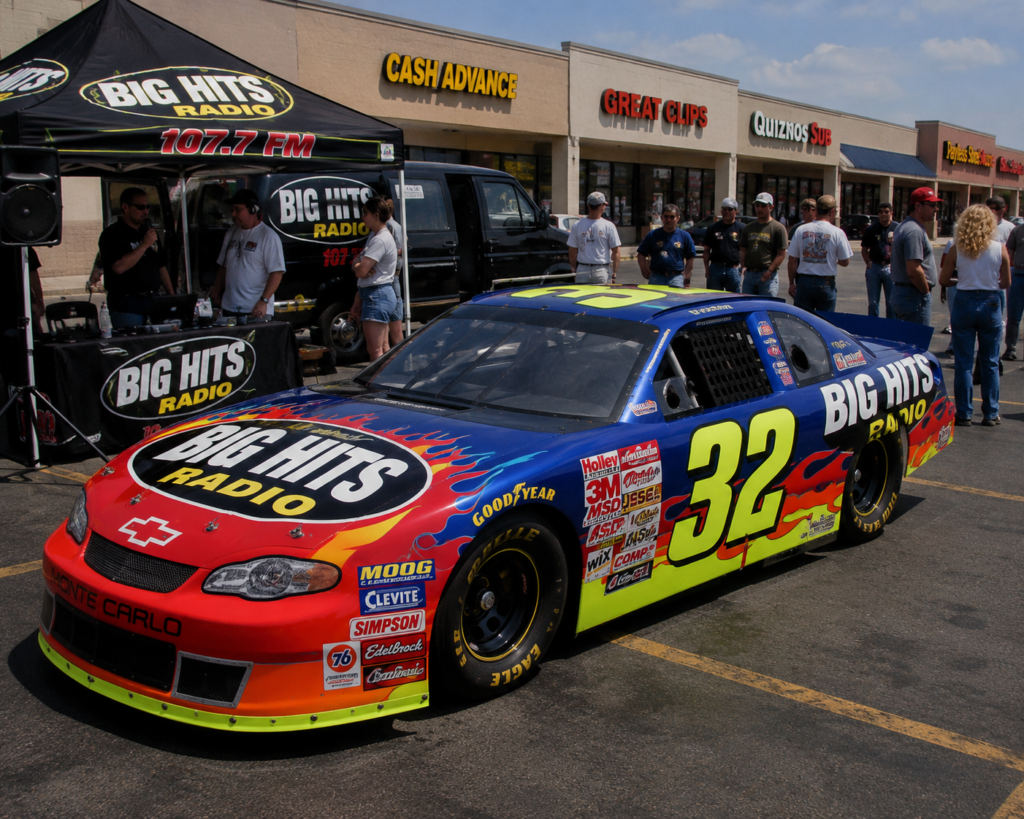
Photo created by AI to illustrate the story.
Lesson Recap: Build Relationships
Being fast can get people’s attention, but relationships create opportunities.
When you move into a new racing community, it takes more than showing up and winning races. People need to know who you are, trust you, and understand what you bring to the community.
Sponsors are the same way. They are more likely to support people they know, respect, and trust.
Building relationships takes time, but those connections can create opportunities you never expected.
ask
“Why should I spend time building relationships when I just need to go faster?”
learn
The relationships you make often bring the sponsorship opportunities.
build
Make a list of 5 people you know where you race and write down one or two ways you can help each other.
Coach’s Note: Your Pit Walk Revisited
Are you starting to see things differently now?
There’s a lot more to this than you probably realized when you started.
Take another walk through the pits.
This time, don’t just look at the race cars. Look at the people, the businesses, the teams, and the relationships around you.
Then pay close attention to what you can learn from the racing legends in this lesson.
Take some notes.
You may be surprised at what you start noticing.
Parnelli Jones
The NASCAR Truck Series was running at my home track before their inaugural season. I was standing there watching practice when a gentleman next to me commented that it was a tough track to get a good setup for.
I told him the racers I worked with felt the same way. I explained that turns 1 and 2 were really like one big corner, while 3 and 4 were completely different. The trick was to master 1 and 2, then get as good as you could at either 3 or 4. If you could do that, you were going to be strong for most of the lap.
The gentleman looked at me and said, “Thanks.”
Then he turned around, got on the radio, and said, “Bring him in.”
I didn’t think much of it.
A few minutes later, after he walked away, a friend looked at me and asked, “Do you know who you just gave driving advice to?”
I shook my head.
“That was Parnelli Jones.”
I just laughed.
Looking back, the thing that impressed me wasn’t that a racing legend was standing there at our hometown track. It was that he was willing to listen.
Parnelli Jones didn’t need to prove anything to anyone. He had already accomplished more in racing than most people ever dream of. But when he had an opportunity to learn something that might make his team better, he took it.
That moment stuck with me.
One of the biggest mistakes people make is believing that experience means they have nothing left to learn.
The truth is just the opposite. The more successful someone becomes, the more they understand how much they don’t know.
That’s one of the things I’ve always loved about racing. No matter how successful someone becomes, there is always something they can learn from someone else.
The best racers, the best leaders, and the best people all share one trait: they stay curious.
Everyone is your teacher.
Lesson Recap: Stay Teachable
The best racers never stop learning. Experience is important, but it does not mean you know everything.
The people who continue to improve are the ones who stay curious and listen to others.
In racing and sponsorship, you will meet people with different experiences, ideas, and skills. Every person has something they can teach you.
The more willing you are to learn, the more opportunities you can create.
ask
“Why should I listen to someone else? I already know what I’m doing.”
learn
Everyone has something to teach you. Stay open to new ideas.
build
Look for someone doing something that you’d like to learn and ask them to teach you.
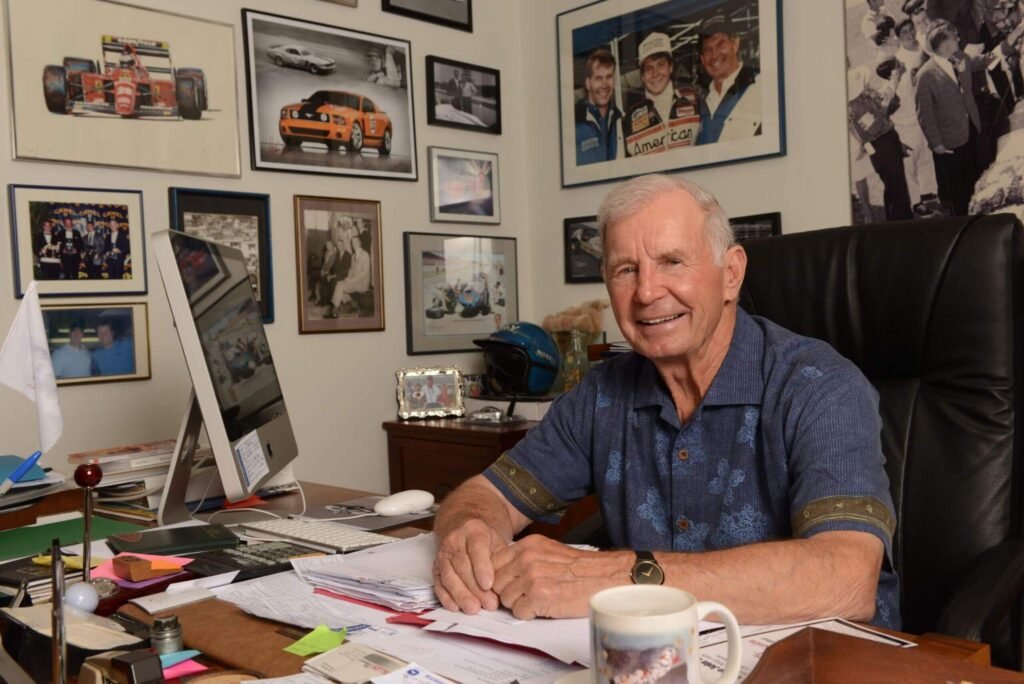
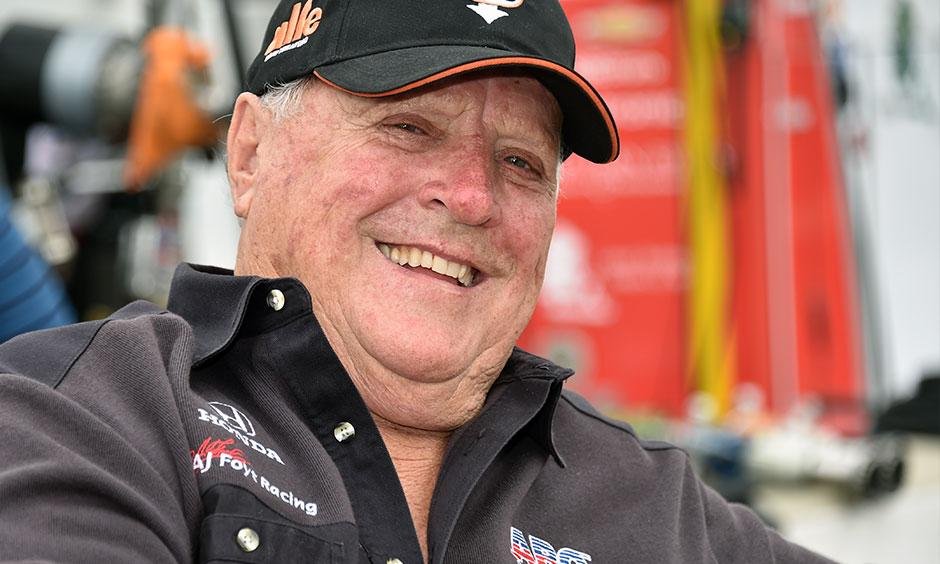
AJ Foyt
Back in the mid 1990s I was publishing a regional racing magazine. In the fall of 1995 I was walking through the infield motorhome area at Phoenix International Raceway when I saw AJ Foyt sitting outside his RV talking with some friends.
I walked up, introduced myself, and handed him and the others a copy of the magazine. I told them that if they wanted a subscription for their shops, they could send me an email and I’d be happy to set them up.
AJ reached into his pocket, handed me a card, and said, “Just send it here.”
That was it. Maybe a five-minute conversation.
A year later, I was back at the same track and saw AJ again. I walked up and said, “You probably don’t remember me…”
Before I could finish, he said, “I know you. You’re the magazine guy.”
That moment stuck with me.
Not because I was somebody important. I wasn’t a famous driver or a big-name personality. AJ remembered me because I kept showing up. Not in person, but every month, that magazine arrived. My name, my work, and my commitment were right there in front of him. I had made a connection, and I kept reinforcing it.
AJ Foyt is arguably the biggest name in American racing. He is surrounded by hundreds of people all the time, yet he remembered me, that magazine guy.
It is something every racer should understand. People don’t always remember the first conversation. They remember the people who keep showing up.
Lesson Recap: Stay Connected
Relationships are built over time.
A single conversation can start a relationship, but staying connected is what builds trust. People remember the ones who continue to show up, provide value, and keep their commitments.
In racing and sponsorship, being remembered matters. You do not have to be the biggest name in the room. You just have to keep building relationships and staying involved.
ask
“Why should I keep following up if someone doesn’t help me right away?”
learn
Relationships are built by consistently showing up. Persistence is the key.
build
Identify a relationship you want to strengthen and decide how you will stay in touch with them.
Then make a schedule and stick to it. This could be a weekly progress report, a regular online post, or whatever works for your situation.
Coach’s Note – Stay Visible.
Whether it is your photo in a magazine every month, a weekly social media post, or simply being at the track face-to-face week after week, the key is staying in front of the racing community as much as possible.
People support the racers they know. Sponsors notice the racers who are active, involved, and consistently representing themselves well.
You don’t have to win every race to create opportunities, but you do have to be remembered.
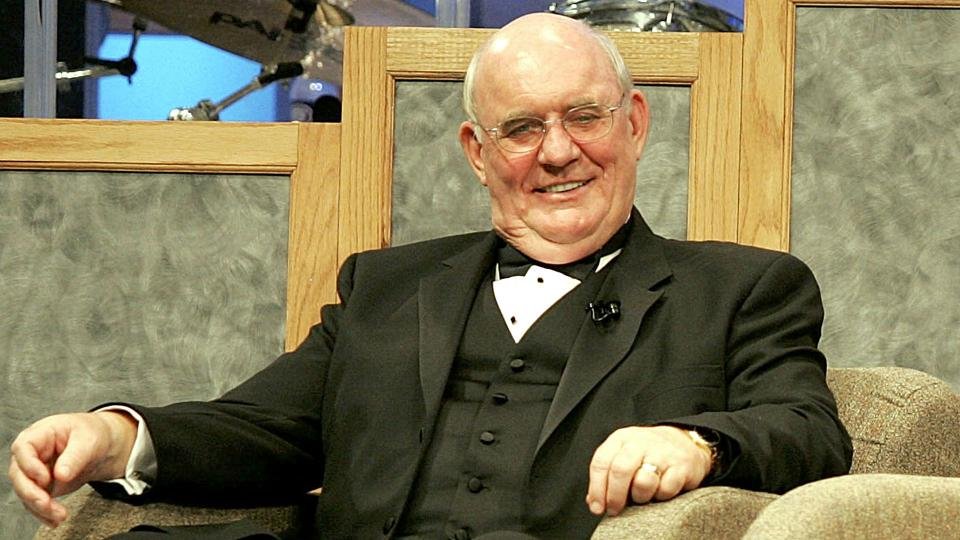
Benny Parsons
I was trying to make my own big break into the national level. When the NASCAR Winter Heat Series came into my backyard, I knew I had to make the leap.
I approached several of the newly formed NASCAR Craftsman Truck Series teams and eventually aligned with a small team out of Lynden, Washington. They were also taking their own swing at the big leagues.
One of the first things I did was build media packages. I figured the world would have its eyes on this new series, and we needed to be ready.
Some of the biggest names in NASCAR at the time were there—Richard Childress Racing, Yates Racing, and Hendrick Motorsports—not to mention some of short track racing’s finest.
I met Benny Parsons, who was the TV color commentator for the national broadcast. I handed him a printed binder and a disc with PDF files.
Honestly, I thought he’d toss it in the nearest trash bin the moment I walked away.
But he didn’t.
Not only did he keep it, I later found out I was the only one who gave him a package. Sure, he already knew the names like Mike Skinner and Ron Hornaday Jr., but most of the short track guys were new to him.
He had maybe four racers he was familiar with and three hours of broadcast time to fill—and suddenly he had a media package on a little-known racer from Washington state.
Between mentions of the leaders, it became:
“Five-time Skagit Speedway champion this…”
or “Former motocross champion that…”
By the end of the race, my driver was a few laps down and getting passed again when Skinner took the checkered flag.
The funny part was, Benny talked about my driver so much that some fans actually thought he finished second.
In reality, he was nowhere near it.
But he got some of the best national air time in the field—all because of a few dollars worth of printing and the decision to show up prepared.
Lesson Recap: Be Ready When Opportunity Appears
The lesson from this story is simple:
Opportunities often come to the people who are prepared to take advantage of them.
You cannot control who notices you, when they notice you, or what opportunities may come your way.
But you can control whether you are ready when that moment happens.
A good story, quality information, and professional materials make it easier for others to understand who you are and share your story with others.
In racing and sponsorship, being prepared can separate you from everyone else.
Sometimes the smallest effort can create the biggest opportunity
ask
“Why do I need all this information and preparation? I’ll worry about it when something happens.”
learn
Preparation creates opportunity. You cannot control when someone notices you, but you can control whether you are ready when they do.
build
Create a team information sheet with your racing story, accomplishments, experiences, and quality photos.
Share it with people who might be interested in your team.
The 4-Year-Old Follow-Up
By the way, that 4-year-old never did get a check from that first sponsorship.
And that was okay.
Between the dealer discount, some free parts and consumables, a brand-new motorcycle, and a brilliant service department engineer who helped us find speed, we had what was probably one of the most valuable Pee Wee sponsorship programs in the country.
The value was never measured by a check.
It was measured by what both sides gained.
That 4-year-old went on to win multiple track championships and an AMA title. The dealer sold a bunch of motorcycles.
That is how a true sponsorship partnership works.
Both sides create value.
Both sides benefit.
Everybody wins.
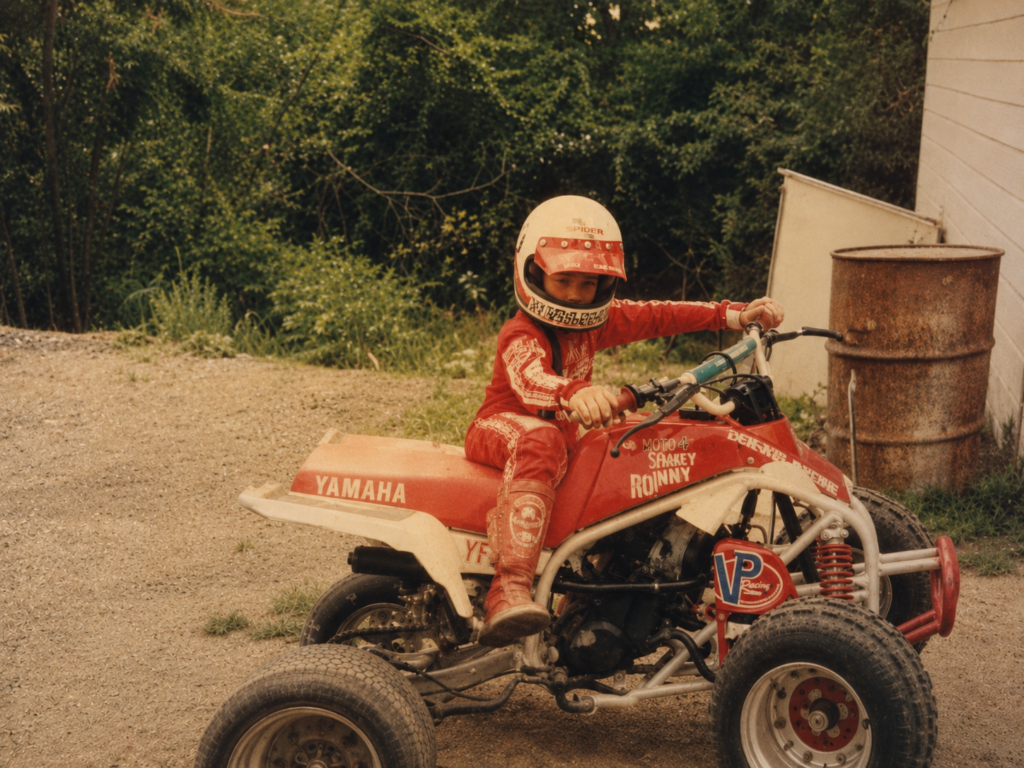
Photo courtesy of Thomas Keeley
Lesson Recap: Measure Success Beyond the Check
A successful sponsorship is not only about how much money you receive.
The best partnerships create value for everyone involved. A sponsor may help your team with parts, equipment, discounts, or opportunities. Your team can help a business by connecting with customers and representing them well.
The goal of sponsorship is not just to find someone who will write a check. The goal is to build a partnership where everyone benefits.
ask
“How do I know if my sponsorship efforts are working if I don’t get a big check?”
learn
Sponsorship value is not measured only by money and race wins.
build
List everything your sponsor could provide besides money, and everything you can provide them besides wins.
Coach’s Note: Your Pit Walk
You’ve made it through Lesson 10.
Now take one more pit walk.
But this time, bring your old notes with you.
Look at the things you noticed the first time. Then look around again.
What do you see now that you didn’t see before?
What makes more sense now?
What would you do differently?
You haven’t just learned more about sponsorship.
That’s the point of this exercise.
You’ve learned to see your racing world differently.
And that’s a pretty big change.
Hopefully, this guide has flipped the way you think about sponsorship.
One thing that helped me overcome the fear of approaching businesses was realizing something simple:
It’s Not Make It or Break It.
Sponsorship proposals do not make it or break it.
If you approach a business and they decide they are not interested, you are in the exact same position you were before the conversation.
You still have your race team. You still have your goals. You still have the lessons you learned.
The only difference is that now you have more experience.
Every conversation teaches you something.
Maybe you learn how to explain your team better. Maybe you discover a different way to create value. Maybe you learn what a business is looking for.
And sometimes, you may find a business that wants to work with you — even if neither of you knows exactly what that partnership looks like yet.
That is okay.
You don’t have to be a sponsorship expert.
The best partnerships are often built by people who are willing to learn together.
A business may not have worked with a race team before. You may not have built a sponsorship partnership before.
That doesn’t mean it cannot work.
Ask questions. Listen. Create value. Adjust along the way.
You are not asking someone to take a chance on a finished product.
You are inviting them to be part of building something.
Racing Legends Mentioned In This Guide
Parnelli Jones
Parnelli Jones was one of the most versatile and respected racers in American motorsports history. Born Rufus Parnell Jones in Arkansas and raised in California, he built a legendary career by winning in nearly every type of racing he entered. He is best known for winning the 1963 Indianapolis 500, but he also captured championships in USAC stock cars and off-road racing, competed successfully in NASCAR, and later became a championship-winning car owner. Known for his toughness, mechanical understanding, and fearless driving style, Jones helped shape modern American racing and was inducted into multiple motorsports halls of fame. His remarkable success across pavement, dirt, stock cars, Indy cars, and off-road competition has earned him recognition as one of the greatest all-around drivers in racing history.
AJ Foyt
AJ Foyt is one of the greatest and most versatile drivers in the history of motorsports. Born in Houston, Texas, in 1935, Foyt built a legendary career that included a record-tying four victories in the Indianapolis 500, seven USAC Championship Car championships, and more than 150 major race victories across open-wheel, stock car, and endurance racing. Known for his toughness, determination, and no-nonsense approach, he became the first driver to win the Indianapolis 500, Daytona 500, and 24 Hours of Le Mans. Beyond his driving success, Foyt became a respected car owner and mentor, continuing his influence in racing through AJ Foyt Racing. His career represents the grit, adaptability, and competitive spirit that define a true racing legend.
Benny Parsons
Benny Parsons (1941–2007) was a NASCAR champion, Daytona 500 winner, and one of the sport’s most respected ambassadors. Born in North Carolina and raised in Detroit, Parsons began his racing career working as a mechanic before becoming a successful driver, earning the 1975 NASCAR Cup Series championship and winning the 1975 Daytona 500. Known for his smooth driving style, consistency, and ability to get the most from his equipment, he competed at NASCAR’s highest level for more than two decades. After retiring from full-time racing, Parsons became a beloved television analyst, using his firsthand racing knowledge and straightforward personality to educate and entertain generations of fans. His combination of talent behind the wheel and professionalism behind the microphone made him one of the most influential figures in NASCAR history.
Coach’s Note
Local racers should not rely on sponsorship.
Race within your means.
Have fun.
If chasing sponsorship becomes anything other than a new adventure, stop.
Move down a class if you need to.
There is no shame in racing where you can afford to race.
We race because we love it.
Sponsorship should make racing better, not become the reason you are miserable.
Don’t lose that love for racing.
Dennis
AI Assistance: AI tools were used in the preparation of this guide for grammar, proofreading, editing assistance, and selected image generation. The ideas, experiences, stories, and final editorial decisions are the author’s.

DenKel Media